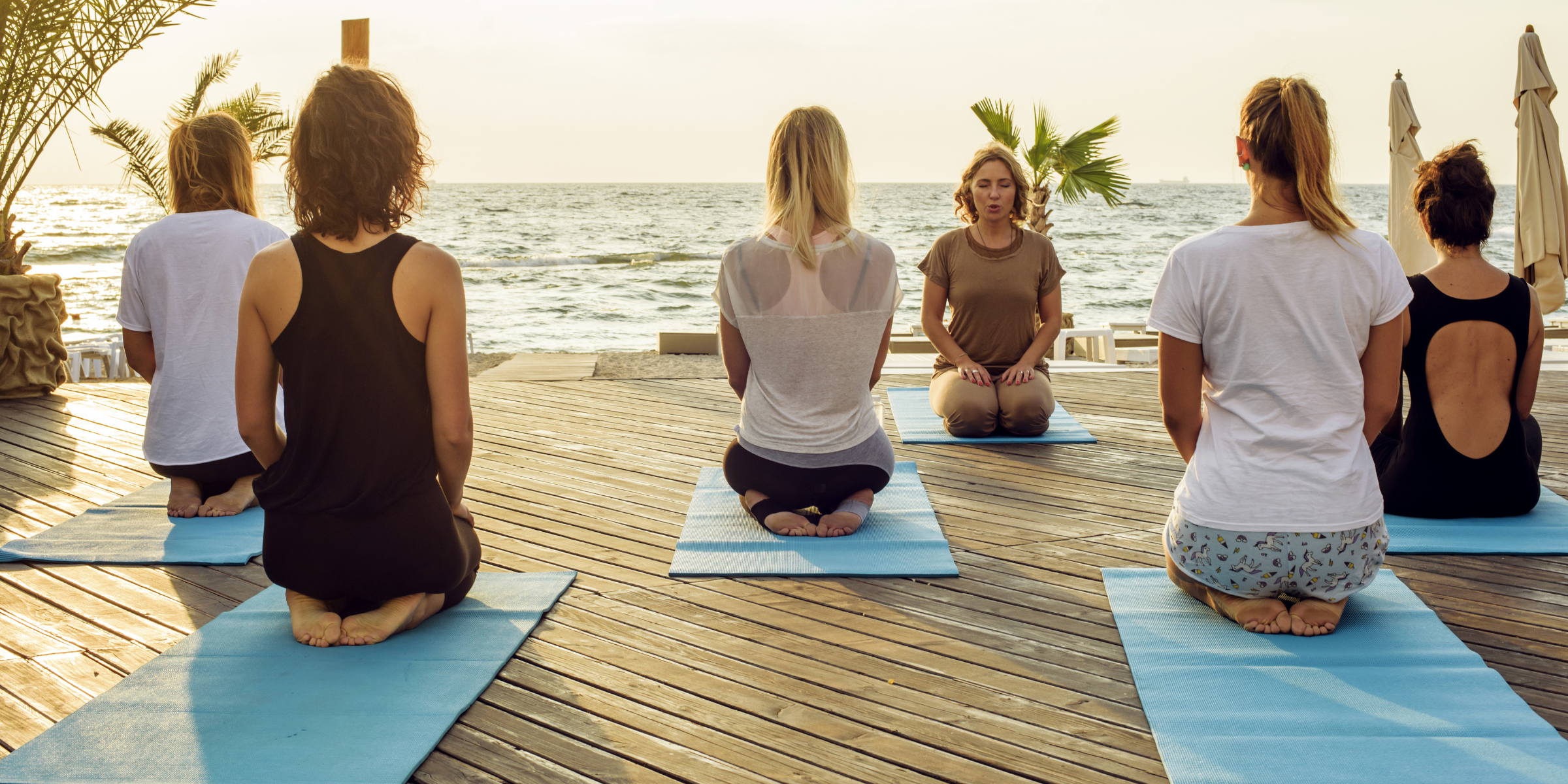


Yoga settles your mind and centers your soul.
Withdraw your attention from the external world, go within and find quiet and stillness.
Connect with your body and breath, get out of your thoughts, and release tension, leading to deep relaxation. Ahhhh, Savasana.
Your body, mind, and spirit will come to remember what it feels like to be integrated, whole, and at peace.
Santosha Yoga
Santosha is a Sanskrit word that can be translated as “contentment”. This practice is especially designed to settle the mind and center the soul, bring you into awareness of your body and thereby allowing your to connect to yourself. By withdrawing your attention from external stimulation of the senses, you’ll find an opportunity for stillness. Through the movements, your body becomes toned, flexible, and tension is released leading to deep relaxation. Over time, your body, mind, and spirit will come to remember what it feels like to be integrated, whole, and at peace.
What is Santosha yoga?
A yoga practice with the intention of cultivating Santosha or contentment. Contentment signifies balance and a state of restful ease. In this series of postures, the emphasis is on practicing stillness in the mind. A foundational text of yoga says, “Yogas chitta vritti nirodhah” – when translated becomes yoga is quieting the mind into silence.
Why should you practice Santosha yoga?
Aspiring students of yoga who have a basic knowledge of asana (postures) and pranayama (breath practices) will benefit from the practice of Santosha Yoga, though no prior knowledge of either is required. The classes are structured toward a beginner or advanced beginner with freedom for the experienced practitioner to maximize their potential on the mat. This series does not focus on vinyasa, however, vinyasa can be incorporated when transitioning between asanas.
Ayurvedic influence in practice.
Overall, the asanas practiced in Santosh Yoga are intended to focus, calm, and lessen Vata dosha imbalances that can arise from overstimulation of the senses. The asanas also reduce Pitta dosha imbalance brought about by stress and and intense, demanding lifestyle or occupation. To build heat in the body to reduce Kapha dosha, add in vinyasa when transitioning from one pose to the next.
What are Santosha Yoga classes like?
Traditional yoga has at its core, the purpose of settling your mind to bring you to a deeper awareness of your Self. Santosha Yoga is a hatha yoga practice to cultivate stillness in your mind.
Scroll down for a list of poses.
“Yoga is quieting the mind into silence”
Three things to remember:
1. Follow your breath
2. Set your gaze
3. Play your edge
The class is structured toward a beginner or advanced beginner with freedom for the experienced yogini to maximize her time on the mat.
Poses are linked together with breath and a point of focus. Your edge is specific to you and your body – pay attention to your limits and observe them.
The Syllabus: Asanas for Santosha Practice
Beginning Standing Yoga Poses
Vrksasana (tree)
Ardha Chandrasana (half moon)
Virabhadrasana II (warrior II)
Utthita Parsvakonasana (side angle)
Trikonasana (triangle)
Prasarita Padottanasana (wide angle fwd bend)
Utkatasana (fierce or chair)
Poses for Salutation to the Sun
Samasthiti (equal standing)
Uttanasana (forward fold)
Utthita Ashwa Sanchalanasana (runners lunge)
Chattarunga Dandasana (plank)
Astangasana (eight-limb pose)
Salamba Bhujanasana (supported backbend or sphinx)
Adho Mukha Svanasana (mountain or downward dog)
Beginning Seated Yoga Poses
Baddha konasana (bound angle)
Upavistha konasana (seated wide angle fwd bend)
Marichyasana (seated twist)
Setu bandha sarvangasana (bridge)
Matsyasana (fish)
Savasana (relaxation pose)
Intermediate Asanas (modifications available)
Parsvottanasana (intense side stretch)
Parivrtta Trikonasana (revolved triangle)
Parivritta Janu Sirsasana (side bend, revolved head to knee)
Salamba Sarvangasana (supported shoulder stand)
Ekapada Raja Kapotasana (royal pigeon)
Padasthila Janurasana (double pigeon)
Notes on practice
These asanas (poses) are examples to give the learner an overview of what to expect in a typical class.
Not all poses are done in every class; a flow of sun salutation variations with several standing and seated poses are offered.
Every individual is gently guided to select the poses that provide the most benefit according to their structure and flexibility.
The intention of asana is to discharge stress and tension while promoting a quiet, centered mind.
Please let me know if you have any questions or would like an individual session. Working with an instructor one-on-one provides an opportunity to learn the basic concepts and cues found in any group yoga setting.
An individual session may serve to increase your confidence in exploring the abundant variety of yoga classes offered in your community!

OM